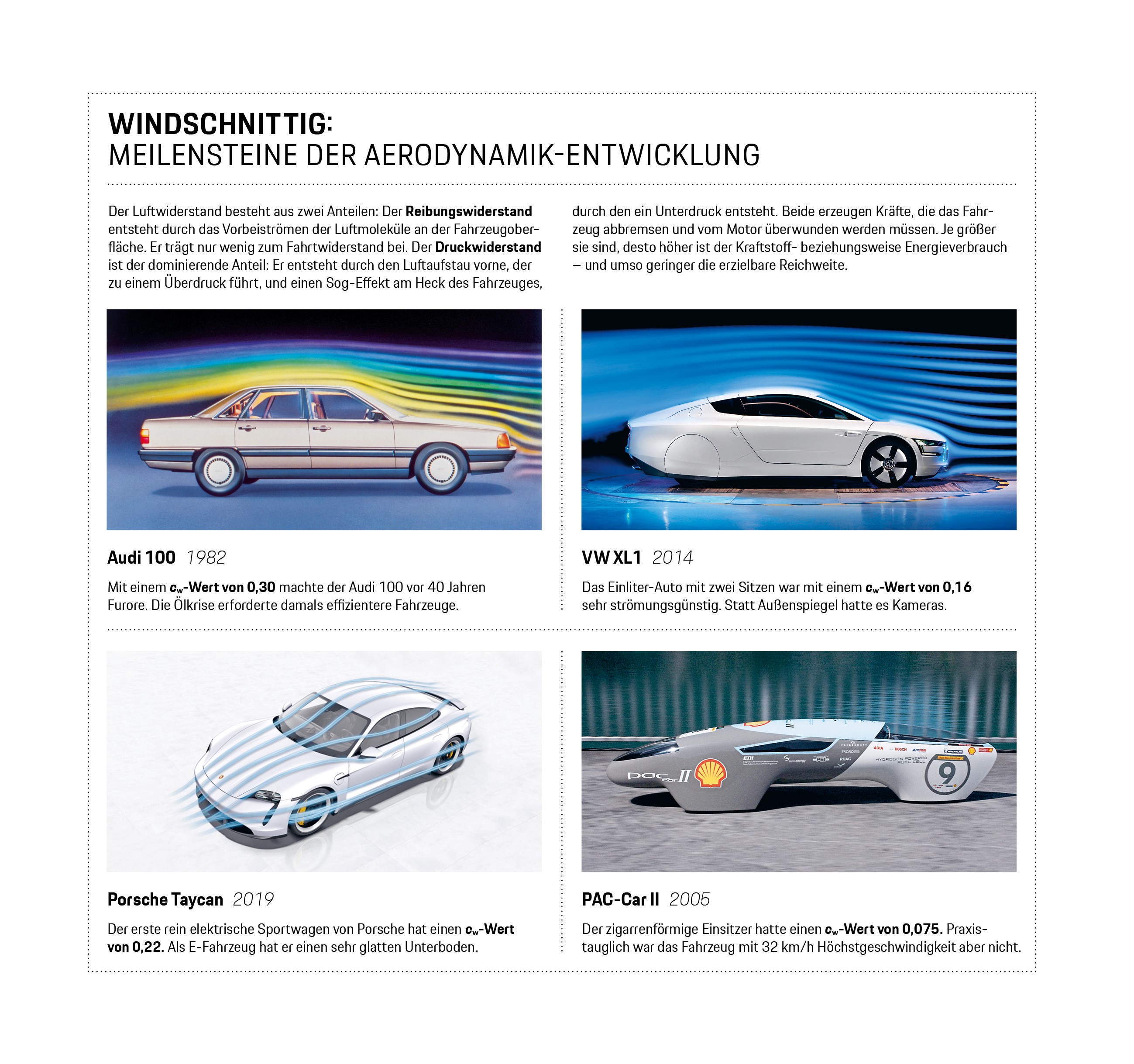
40 years earlier, numerous chauffeurs was familiar with a brand-new word: c w worth When the brand-new Audi 100 struck the marketplace in 1982, the maker provided it as “the world’s most structured production sedan”. The file, which was fascinating at the time, was utilized as proof c w worth of 0.30 The reality that vehicle towing unexpectedly ended up being a selling point was because of the oil crises of 1973 and 1979, simply a couple of years back.
This likewise increased the significance of aerodynamics. Air resistance plays an essential function in fuel usage, particularly at high speeds. “From about 80 kilometers per hour it ends up being more crucial than the resistance of the tires,” discusses Marcel Straub, expert job supervisor for aerodynamics and thermal management at Porsche Engineering. “And since it increases with the square of the speed, aerodynamics is very important for fuel intake, specifically when driving on the highway.”
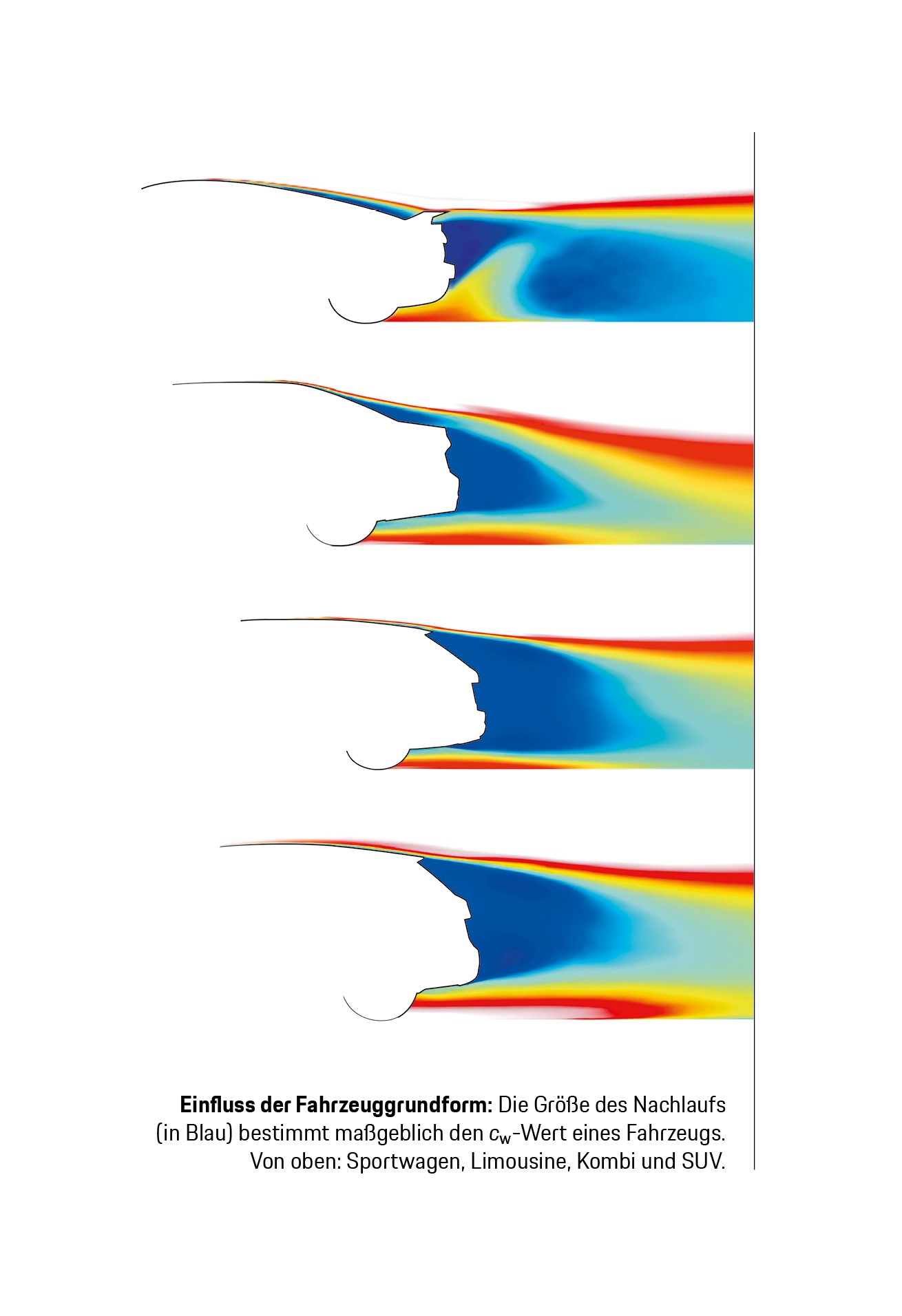
The item of the frontal location and the vehicle identifies the vehicle’s drag c The w worth at the end demonstrates how the geometric shape is well balanced. The following uses: the smaller sized, the much better. Water drops come extremely near perfect since they are round in the front and long in the back. His c the worth of w is just 0.05 It is challenging to bring the vehicle, travelers and payload in teardrop-shaped lorries.
The traditional wedge shape with a rounded front and angular back has actually prevailed because the 1980 s. Its primary function is to decrease drag at the back of the vehicle. Sharp edges permit the circulation to break in a targeted way and decrease unfavorable pressure, which lowers air resistance. That’s what they were c w-values keep improving: the Opel Calibra reached 0.26 in 1990, and the Audi A2 reached 0.25 10 years later on. “Those were huge actions in aerodynamics,” keeps in mind Prof. Andreas Wagner, Chair of Automotive Engineering at the University of Stuttgart.
The next action is presently underway, driven by the electrical shift. “Electric drives are more effective than combustion engines, so other impacts on energy usage are more crucial,” discusses Dr. Thomas Wiegand, Head of Aerodynamics Development at Porsche AG. “In the WLTP driving cycle, aerodynamics is accountable for 30 to 40 percent of the losses in electrical cars, rather than less than 10 percent in a cars and truck with a diesel or gasoline engine. And due to the fact that the typical speed in the cycles near the client is much greater than that of WLTP, this worth ought to be more than 50 percent in the genuine operation of electrical lorries.”

Accordingly, producers position excellent significance on the enhanced aerodynamics of their electrical automobiles. New drive innovation matches them well: Cars with combustion engines have a tunnel in the middle of the bottom and an exhaust system that needs to be cooled by ambient air. The strengthened surface area triggers air turbulence and increases rolling resistance. In e-cars, on the other hand, the battery lies in between the front and rear axles. Its underside is rather smooth, which adds to excellent aerodynamics.
intervention of active aerodynamics
Another benefit of e-mobility is that the motors create less heat, suggesting that less energy needs to be sent through the coolant. Little or no air circulation through the engine compartment is essential, which minimizes the air resistance of e-cars. In many electrical lorries, separately manageable cooling air curves in the air consumption guarantee that just the needed quantity of air is gone through the radiator and brake discs. Since the innovation actively steps in depending upon the driving circumstance, specialists describe such procedures as “active aerodynamics”.
This likewise consists of retractable and extendable spoilers and an air-sprung chassis that reduces the cars and truck at high speeds. “To carry out these procedures, we at Porsche Engineering are establishing our proficiency in the location of work and software advancement,” Straub states. “In this method we can securely bring an active action on the efficiency side to the maturity of the series.” Modern electrical cars maximize these technical possibilities: With drag coefficients of 0.22 and 0.20, the Porsche Taycan and Mercedes EQS are well ahead. regards to front aerodynamics.
Active aerodynamic procedures might play a higher function in the future and considerably alter the look of cars when driving. Mercedes-Benz provided the Vision EQXX principle vehicle with a drag coefficient of 0.17 Visible modifications when driving consist of a diffuser on the lower edge of the back: it straight extends back by 20 centimeters at speeds above 60 km/h. With a sharp spoiler lip on an abnormally long tail, it makes sure low air resistance.
” For EQXX, the focus was on energy effectiveness,” reports Dr. Stefan Kröber, aerodynamics engineer at Mercedes-Benz and speaker at the Karlsruhe Institute of Technology. “A fundamental part of this is the enhanced aerodynamics. The EQXX needs to take in less than 10 kWh over 100 km, while the existing EQS is still a minimum of 15 kWh.” Professional Straub can likewise picture that cars will alter their shape when driving in the future: “For example, the back can be more angular at high speeds to develop sharper breaking edges. The basis of this can be brand-new shape-memory materials.They alter their geometry depending upon the temperature level or used voltage.

At the University of Stuttgart, scientists are pursuing a totally brand-new technique: “We are examining whether targeted vibrations at particular points on the body can be utilized c it can lower the worth of w,” discusses Wagner. “If you present specified pulses into the circulation around you with the assistance of speakers, you can affect their dissociative habits.” c w-value at 7 percent. “But that’s still a long method from the variety,” states Wagner. “For example, we need to make certain that the travelers do not hear any buzzing or banging.”
Better and much better simulation
Engineers and designers utilize wind tunnels and CFD (electronic fluid characteristics) simulations to examine the degree to which their concepts impact the aerodynamics of brand-new cars. “CFD simulation has actually gotten in significance in the last 20 years,” reports Wagner. “Mathematical approaches have actually progressed comprehended, more exact tools have actually been established and computer system efficiency has actually likewise increased.”
However, computer system simulations still reach their limitations. At present it is just possible to measure the impacts of turning tires on a little scale. Even their contortion under the weight of the cars and truck can not be simulated with adequate precision today. This ought to be possible in the future, with computer-aided optimization of vehicle geometry. “Many specifications contribute here, such as the motion of the lateral line, the A-pillar, the height of the trunk cover or the angle of the diffuser,” describes Wagner. “This results in a lot of mixes that a person can no longer track them.” Smart algorithms, on the other hand, can go through a vast array of variables and discover those mixes that have the most affordable rate. c pledge of w-value. It will likewise be possible to set a specification– such as the length of the trunk cover– continuous for style factors and then go through the staying geometric variations under these limit conditions.
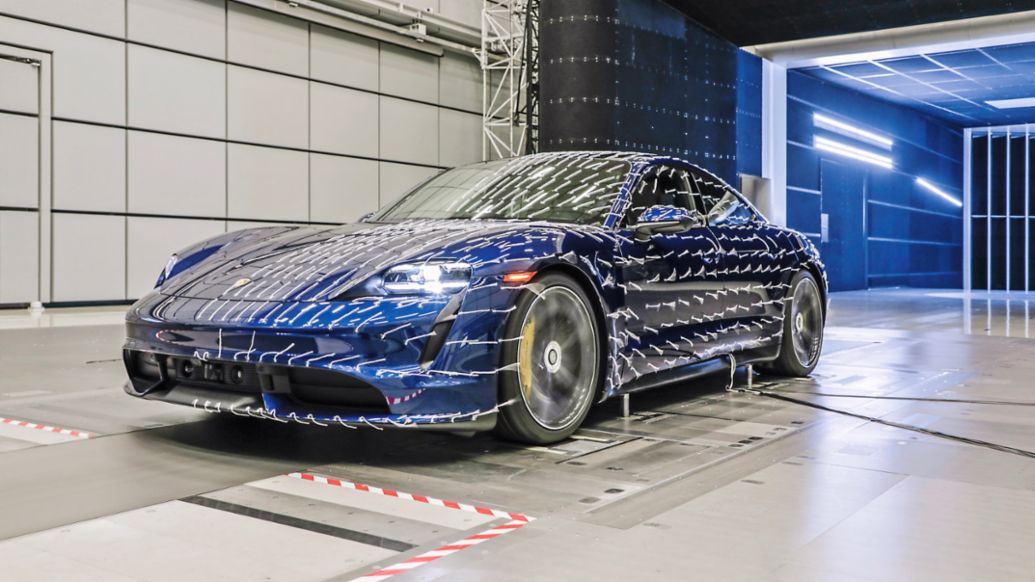
In the future, expert system (AI) must add to more effective procedures. “At the end of the advancement, we need to figure out the specific usage or variety levels for each vehicle variation, which weight and rolling resistance in addition to aerodynamics contribute,” discusses Wiegand. “So we need to offer a great deal of information for the aerodynamic part.” A big number of wind tunnel measurements and simulation outcomes are currently readily available from early advancement stages. These ought to be much better arranged in the future and evaluated utilizing contemporary techniques. “AI algorithms can draw out brand-new information from existing information through analysis and discussion. This permits us to prepare tests in a targeted method and decrease their number. And we no longer require to check all typing variations.”
Real-time optimization with AI
Porsche engineering is likewise dealing with making use of AI techniques. The designers intend to anticipate the results of modifications in vehicle geometry in genuine time. Lengthy CFD simulations are still needed for every variation today, in the future neural networks will have an impact on c Calculate the worth of w more rapidly. “You alter the shape with the mouse and you instantly see what that implies for aerodynamics,” states Straub. “We have actually currently used this AI-based procedure to the wing profile of the Porsche GT3.” The brand-new approach is being more established together with AI professionals from Porsche Engineering and the roadway advancement department at Porsche AG in Weissach.
It is not anticipated that all aerospace-engineered cars will look the very same in the future. “Good c The w-value can be acquired in various methods,” states Wagner. “If you wish to enhance the back, for instance, you can alter the height of the boot cover and the diffuser on the bottom. In combination with the style, the perfect should be discovered that fits the brand name. In this method, similar aerodynamics can be attained for various shapes.” Even professional Straub does not think in a future basic style: “There will be no threat of confusion in the future either– even with the very best aerodynamic cars.”
It has actually been reduced
With the shift to electronic movement, cars are flying in aerodynamics. In the future, more active procedures such as back-changing shapes or intentionally presented vibrations must represent this. There have actually likewise been substantial advances in simulation and speculative optimization utilizing expert system.
details
The text was very first released in Porsche Engineering Magazine, concern 2/2022
Author: Christian Buck
Copyright: All images, videos and audio files released in this short article undergo copyright. Recreation or recreation in entire or in part is restricted without the composed consent of Dr. Ing. hc F. Porsche AG is not enabled. Please call newsroom@porsche.com for more details.
.


